
10 Smart Ways to Keep Your Pets Mentally Stimulated at Home (Backed by Science)
Keep your pets happy and healthy with 10 science-backed ways to boost mental stimulation at home. Easy, fun, and expert-approved enrichment ideas for all pets.
5/8/20243 min read

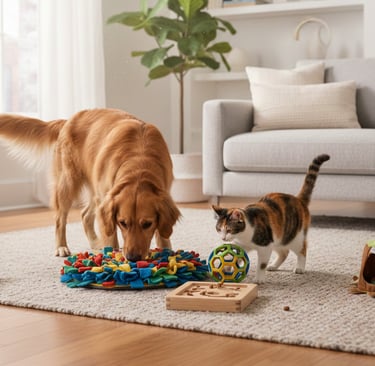
Pets need more than food, water, and love. They also need mental stimulation to stay healthy and happy. Science shows that mentally enriched pets have better behavior, reduced stress, sharper cognitive abilities, and a longer life. Whether you own a dog, cat, rabbit, or bird, keeping your pet’s brain active is just as important as giving them physical exercise.
In this guide, you will learn smart, practical, science-backed ways to stimulate your pet’s mind at home using simple tools, daily habits, and creative play.
Key Takeaways
Mentally stimulated pets live healthier, calmer, and more fulfilling lives.
Simple activities—like puzzle toys, scent games, and training—can boost brain activity.
Enrichment reduces stress, boredom, and destructive behavior.
You don’t need expensive tools; consistency matters more.
Why Mental Stimulation Matters for Pets
Research in animal behavior and veterinary science shows that pets who receive regular mental challenges experience lower stress levels and improved emotional well-being. According to the American Veterinary Medical Association (AVMA), enrichment helps prevent anxiety, aggression, and depression in animals.
When pets get bored, they may show destructive behaviors like chewing, scratching furniture, barking excessively, or overeating. Mental workouts help reduce these problems and give your pet a sense of purpose.
Now let’s explore the 10 best science-backed ways to keep your pets mentally active at home.
10 Smart Ways to Keep Your Pets Mentally Stimulated at Home (Backed by Science)
1. Use Puzzle Toys to Make Them Think
Puzzle toys encourage pets to use their nose, paws, and brain. Research shows that problem-solving activities activate the same reward centers in pets that physical exercise does.
Examples include:
Treat-dispensing balls
Snuffle mats
Sliding puzzle boards
Interactive feeders
Puzzle toys increase dopamine release, which boosts mood and focus. You can even make DIY puzzles using cardboard boxes, old towels, or muffin trays.
2. Try Scent and Nose Work Games
Animals naturally love to explore scents. Nose work engages their strongest senses and reduces anxiety.
Try these easy scent games:
Hide treats under cups
Scatter food around the room
Create a “treasure trail” of smells
Use safe herbs like catnip for cats
Studies from animal cognition labs show that scent work activates significant parts of a dog’s and cat’s brain and improves emotional regulation.
3. Teach New Tricks and Commands
Training isn't only about discipline—it’s one of the best ways to stimulate your pet mentally.
Simple commands like “sit,” “stay,” “spin,” or “high five” help build new neural pathways.
Science confirms that learning new skills boosts brain plasticity in animals. Use short, positive sessions of 5–10 minutes to keep it fun and stress-free.
4. Rotate Toys Weekly
Pets get bored with the same toys when they see them every day. Rotate their toys weekly so each item feels new again.
You can keep:
Chew toys
Plush toys
Cat wands
Balls
Puzzle feeders
This simple strategy prevents sensory fatigue and keeps playtime exciting.
5. Create Indoor Obstacle Courses
Interactive physical challenges give both body and brain a workout.
Ideas include:
Pillows as jumps
Boxes as tunnels
Chairs as weaving obstacles
Towels as crawling mats
Obstacle courses promote problem-solving, coordination, and confidence. For cats, you can create vertical playgrounds using shelves or soft climbing stations.
6. Add Food Enrichment Activities
Feeding your pet in the same bowl daily is predictable and boring. Switch things up to make mealtime interesting.
Try:
Slow feeders
Frozen treats
Stuffed Kongs
Foraging toys
Food-dispensing cubes
According to studies published by major veterinary schools, pets who engage in food puzzles show calmer behavior and better digestion.
7. Provide Safe Chewing Options
Chewing is a natural mental and stress release, especially for dogs and some small pets.
Choose safe chew items like:
Dental chews
Natural chew sticks
Rubber chews
Nylon toys
Chewing releases endorphins and reduces boredom and destructive behavior.
8. Encourage Interactive Playtime
Pets crave interaction with their humans. Spend at least 10–20 minutes daily on interactive games such as:
Fetch
Tug-of-war
Laser pointer chases (for cats)
Feather wand play
Interactive play strengthens your bond and provides essential mental and physical stimulation.
9. Offer New Sounds and Visual Enrichment
Pets enjoy new sensory experiences. You can enrich their environment using:
Bird videos
Nature sounds
Pet-safe music
Window perches
Fish tanks to observe
Some studies show that calming music helps reduce stress in dogs and cats, while visual stimulation keeps them curious and engaged.
10. Give Them Social Enrichment
Pets need social interaction to stay emotionally balanced. This can include:
Playdates with other pets (if safe)
Gentle grooming sessions
Talking to your pet
Hand-feeding occasionally
Introducing new safe objects or smells
Social connection lowers cortisol levels and increases oxytocin—the “bonding hormone”—in both you and your pet.
People Also Ask (FAQs)
1. How much mental stimulation does my pet need each day?
Most pets need 20–40 minutes of mental enrichment daily. High-energy breeds may need more frequent sessions.
2.Can mental stimulation replace physical exercise?
No. Mental challenges support emotional and cognitive health, but pets still need regular physical activity for overall well-being.
3. What are signs my pet is bored?
Common signs include chewing, barking, scratching, overeating, pacing, or sleeping excessively.
4. Are puzzle toys safe for all pets?
Yes, as long as you choose size-appropriate and pet-safe materials. Always supervise during the first few uses.
5. Do cats also need mental stimulation?
Absolutely. Cats benefit from play, climbing structures, puzzle feeders, and scent exploration just as much as dogs.